16/01/2026 | SIAN
The growth of the modularconstruction market in Mexico
In Mexico, modular construction is consolidating as a concrete response to the current challenges of real estate development. The need to reduce execution times, optimize initial investment, and minimize environmental impact is leading developers and investors to rethink traditional construction models and adopt more efficient and controllable systems.
Increasingly, landowners in Mexico are seeking to activate their assets without compromising long-term value. Land with natural, scenic, or ecological potential is no longer conceived as suitable for intensive construction, but rather as assets that must be protected, carefully assessed, and developed through reversible, low-impact interventions. In this context, modular construction emerges as a direct response for those who want to launch projects such as glamping or micro-hospitality without assuming the risks, timelines, and permanent impacts of traditional construction.
This is a natural evolution of the market. The combination of tourism growth, land pressure, rising costs, and increasing demand for better-designed projects has created a context in which modularity enables more precise construction, orderly scaling, and project activation within timelines that were previously not viable.
Overview of the Mexican market
The modular construction market in Mexico generated US$751.5 million in 2025 and, according to a report by
Grand View Research, is projected to reach US$1,292.5 million by 2033, with a compound annual growth rate (CAGR) of 7.1% between 2026 and 2033.
Although Mexico accounted for only 0.7% of the global market in 2025, the permanent modular segment was the highest-revenue category and is expected to remain the most lucrative in the coming years. This trend becomes particularly relevant when looking at its regional positioning: the Mexican Caribbean and other tourist destinations across the country are concentrating on growing demand for industrialized hospitality solutions, driven by the need to develop projects in less time and with lower environmental impact.
At a global scale, demand is led by North America and Europe, generating US$111.07 billion and is expected to exceed US$207 billion by 2033, driven by housing needs, investment in healthcare infrastructure, and the development of new hospitality models. Mexico participates in this dynamic through an expanding real estate market and sustained momentum in the tourism sector.
Factors driving market takeoff
• Reduced timelines and costs
Off-site construction has evolved from a marginal solution to a common practice in commercial, industrial, and infrastructure projects. An analysis by McKinsey notes that modular methods can accelerate timelines by up to 50% and generate significant cost savings. This efficiency responds to growing pressure to execute projects with greater precision and predictability.
• Sustainability and energy efficiency
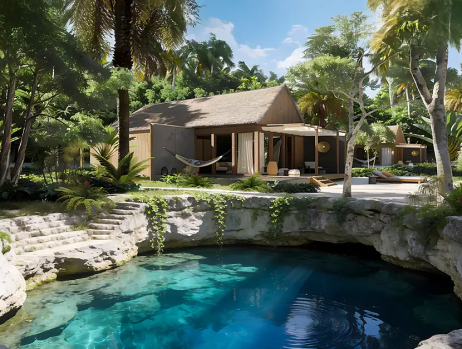
In many current projects, sustainability is no longer assessed solely through energy performance, but through the real impact of construction on the territory. Landowners are seeking solutions that enable project development without permanently altering ecosystems, thereby reducing impacts on flora, fauna, and soil structure. In this scenario, modular construction offers a key advantage: concentrating processes in controlled environments and limiting on-site intervention, thereby preserving the surroundings, maintaining project reversibility, and developing solutions aligned with a long-term vision.
• Tourism demand and new hospitality
Mexico is experiencing a pivotal moment in tourism. Preparation for the 2026 FIFA World Cup and the sustained growth of the Mexican Caribbean have increased the need for a flexible, well-designed hospitality offering. This context is increasing pressure to deliver accommodation solutions that can adapt to new demand dynamics.

• Transformational experiences
At the same time, the focus is no longer solely on expanding capacity but on offering transformative experiences in which travel serves as a tool for reconnection, a change of pace, and a more conscious relationship with the environment. In this scenario, low-density micro-resorts developed through modular systems enable more intimate, carefully curated proposals aligned with this new understanding of hospitality, without resorting to disproportionate investments.
• Asset reconversion and efficient land use
Trends through 2026 indicate a shift toward the reconversion of buildings and the use of existing infrastructure. Faced with urban land scarcity and rising material costs, reconfiguring spaces through modules is consolidating as a clear path to reinvent projects without resorting to demolition.
SIAN examples and proposals for Mexico
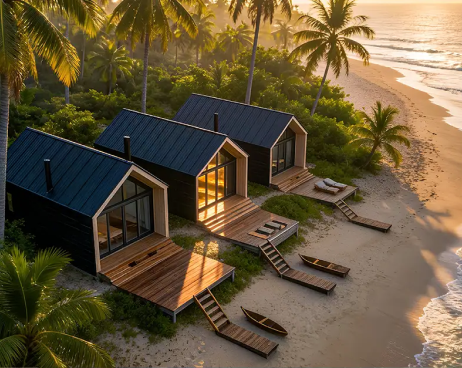
SIAN understands that modularity is more than speed: it is a different way of creating value through design. Through its Ready-to-Go line and custom projects developed with SIAN Studio, it offers solutions adaptable to the needs of each project:
• M01 Nest, a compact 39 m² unit designed to quickly activate land, test its potential, or create exclusive suites with a controlled initial investment.
• M02 Cabin, an 81 m² model designed to combine generous interiors with terraces, ideal for getaways, short stays, or experiences in direct contact with nature.
• S01 Loft, 88 m², conceived for longer stays, with a flexible layout that allows rest, work, and social areas to be integrated within a single space.
• Villas or larger custom spaces, designed for projects that require a broader footprint, generous social areas, or configurations intended for premium stays and high-end hospitality projects.
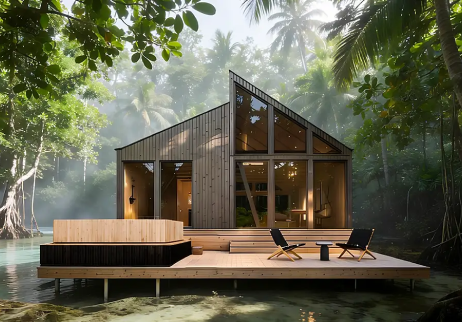
These units are manufactured from certified laminated timber and high-performance glazing; they are produced via CNC processes and installed within 5 to 8 days, enabling owners to launch their projects within a matter of weeks.
Profitability and return on investment in modular projects
In practice, a typical ROI example in Mexico can be found in four-module micro-resorts located in high-demand nature destinations such as the Riviera Maya, the Bacalar Lagoon, and other areas of the Yucatán Peninsula, as well as in consolidated enclaves in the north of the country, such as Todos Santos and La Paz, in Baja California Sur. In these locations, a project with average nightly rates of US$ 220–260 and occupancy levels of 55–70% can generate between US$ 180,000 and 240,000 annually, with margins of 45–60%, and recover the investment within 3–4 years.
In some cases, well-positioned complexes generate more than US$ 400,000 in revenue in their first year, driven by high demand and optimized operating costs. These results confirm that modularity not only accelerates project launch but also directly impacts project profitability.
Modularity as the foundation for well-designed premium experiences
In the current Mexican market, modular construction enables the solution to a key challenge in premium projects: delivering high-quality experiences in natural settings without oversizing the intervention or compromising economic viability. However, the existing supply remains limited. Most modular solutions available in the country are concentrated in standardized, small-scale products, using materials that are poorly aligned with the sustainability, design, and customization criteria demanded by today’s premium segment.
At SIAN, modularity is understood differently. Not as a closed product, but as a design and planning tool capable of adapting to the land, the project, and the experience to be delivered. Each module responds to a specific use—living, resting, working, sharing—and integrates into the environment through a logic of scale, comfort, and low impact. Luxury is not expressed through repetition or excess, but through spatial quality, attention to detail, and coherence with place.
For developers and investors, this approach presents a clear opportunity: to differentiate in a market with limited truly personalized luxury modular supply, to activate projects in an orderly way, and to scale intentionally. For landowners seeking to develop nature-based hospitality or residential projects without compromising their asset, conscious modularity enables new approaches to construction with lower risk and greater control.
If you own land and are evaluating how to develop it for a hospitality or nature-based living project, at SIAN, we can help you analyze its potential and define the appropriate modular strategy from the outset.
Comments