30/01/2026 | SIAN
Living off-grid with self-sufficient modules: independence and comfort for families and hospitality
The idea of living off-grid may evoke images of isolation, sacrifice, or improvised solutions. However, the reality is that today’s technologies make it possible for a family to enjoy a comfortable, efficient home adapted to their lifestyle, without relying on traditional electricity or water networks.
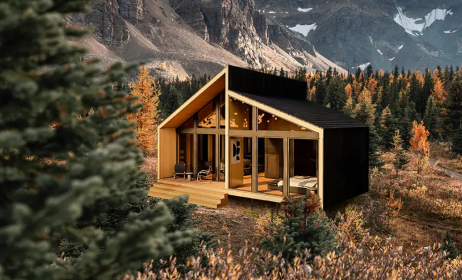
Self-sufficient modules have become a viable option for those seeking energy independence, whether on a rural property, in a nature retreat, or even as a second residence. At SIAN, we understand off-grid living as a well-designed system—not as forced disconnection.
What does it mean to live off-grid?
Living off-grid means not relying on public utility networks such as electricity, water, or sewage systems. In practice, it involves inhabiting spaces capable of generating their own energy, managing water responsibly, and treating wastewater—all integrated from the project’s design stage.
Thanks to advances in renewable energy, storage systems, and smart management technologies, this way of living is now far more accessible and reliable than it was just a few years ago. A family home can operate autonomously year-round, just like an accommodation unit in a natural setting, without affecting everyday comfort.
One of the major myths surrounding off-grid living is the belief that it requires “living with less.” In reality, it means living with what is necessary, thoughtfully resolved through architecture. When a project is well conceived, self-sufficiency goes unnoticed—it simply works.
In addition, recent regulations in Spain and other countries are encouraging designs that consider the environmental impact of buildings throughout their entire life cycle and promote the integration of clean energy infrastructure and sustainable mobility. This confirms that self-sufficiency is not a passing trend, but a clear direction toward which both governments and investors are already moving.
Self-sufficient energy solutions
For decades, architecture was conceived from the perspective of productive efficiency: maximizing surface area, accelerating processes, and responding to standardized requirements. The result is spaces that function but do not necessarily care for those who inhabit them.
• Solar energy and storage
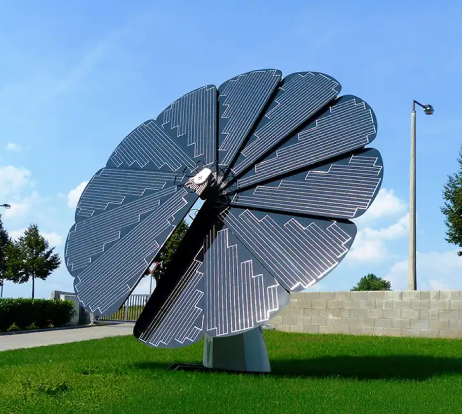
Photovoltaic solar energy, combined with storage systems and intelligent management, makes it possible to meet the daily needs of a family or an accommodation unit without relying on the electrical grid. The key lies in properly sizing the system according to actual usage, climate conditions, and lifestyle.
A family living year-round in a temperate environment is not the same as a hospitality project in a tropical or mountain setting. For this reason, each configuration is tailored to its specific context, avoiding both oversizing and underestimating the solution.
• Hybrid systems and backup
In areas where wind or hydrological resources are available, micro wind turbines or small-scale hydro turbines can be integrated alongside solar panels. A hybrid system provides redundancy: when solar exposure is limited, wind or water can complement the supply.
In extreme climates, with prolonged winters or variable conditions, it is essential to plan for greater storage capacity and low-consumption backup systems used only at specific times. The flexibility to integrate different technologies is key to comfortable and reliable off-grid living.
Modules designed by SIAN are prepared to integrate different levels of energy independence, from hybrid configurations to fully off-grid projects, always based on the location and intended use.
Water: managing, reusing, and respecting the environment
• Water collection
In natural environments, water is a strategic resource. Without access to a public network, water must come from rain, a well, or a nearby spring. Living off-grid does not mean doing without it, but rather managing each cycle more effectively.
Self-sufficient modules can integrate rainwater harvesting systems, storage, filtration, and reuse for non-potable applications. Combined with low-consumption technologies and appropriate treatment solutions, it is possible to significantly reduce dependence on external sources.
For families, this translates into peace of mind and resilience. For hospitality projects, it results in more efficient operations aligned with the expectations of an increasingly conscious traveler.
• Wastewater treatment
Blackwater treatment can be addressed through advanced septic systems or biodigesters installed alongside the home. These systems transform waste into safe fertilizers and reduce environmental impact.
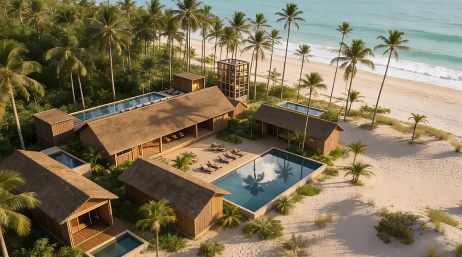
In larger-scale projects, such as self-sustainable micro-resorts, modules are connected to shared treatment plants or constructed wetland systems that naturally purify the water.
Comfort: the true differentiator of contemporary off-grid living
Comfort is one of the aspects that has evolved most significantly in today’s off-grid living. The use of efficient thermal envelopes, cross ventilation, solar control, and high-quality materials makes it possible to maintain stable indoor temperatures across different climates, from warm and humid areas to cold regions.
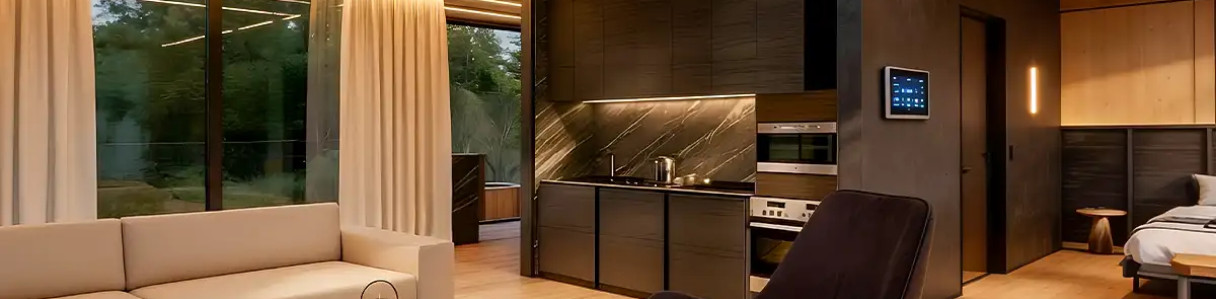
In the modular models designed by SIAN, comfort is part of the architectural standard. Functional kitchens, well-resolved bathrooms, generous spaces, and a direct connection to the outdoors allow both families and guests to experience the space naturally, without compromise.
Off-grid living for families: a real option across different climates
A family seeking to live off-grid does not fit a single profile. Some are looking for a primary residence in close contact with nature; others envision a self-sufficient second home; and some combine personal use with short-term rental during certain times of the year.
Modularity allows these projects to evolve over time. A single module can serve as the starting point for a family home that expands as needs change, or as the first unit of a sustainable retreat that grows in an orderly way—without losing coherence or control over its impact.
For example, a family settling in a warm climate may begin with a well-ventilated, shaded main unit designed for everyday use, and later add a second module for guests or short-term rental. In a hospitality context, the same approach makes it possible to launch a small-scale accommodation project with a limited number of units and gradually scale it, maintaining a carefully curated and consistent experience.
In warm climates, priority is given to cross ventilation, solar control, and a direct connection to the outdoors. In colder regions, by contrast, design focuses on an efficient thermal envelope, proper orientation, and climate protection. In all cases, the principle remains the same: design responds to the place, not the other way around.
Off-grid hospitality: when the experience adds value
More and more travelers are seeking accommodations that offer more than just a bed: coherence, connection with nature, and well-being. Self-sufficient modules make it possible to develop hospitality projects in which the off-grid experience becomes part of the value proposition—not a sacrifice.
For investors and developers, this means reduced dependence on complex infrastructure, greater operational control, and a clear narrative of genuine sustainability.
A family retreat, an eco-lodge, or a micro-resort can operate with high standards of comfort while integrating well-designed self-sufficient systems.
Self-sufficiency designed from architecture
At SIAN, we design modules with real people, real uses, and specific contexts in mind. Whether for a family seeking greater independence or for a sustainable hospitality project, our spaces are prepared to integrate self-sufficient energy, water, and comfort solutions according to the needs of the location and the user.
Self-sufficiency cannot be improvised; it must be planned from the architectural stage. For this reason, our designs facilitate the orderly, efficient, and scalable integration of external energy, water, and technological systems.
Living off-grid today is not about giving something up—it is about choosing how, where, and with what level of quality one lives.
Comments